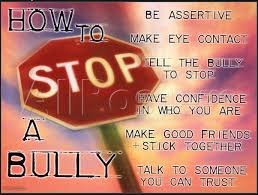
Kindergartners read the book Chester Raccoon and the Big Bad Bully by Audrey Penn. We used this book to introduce to bullying behavior and identify bullying. Students learned what bullying behavior looks like, and discussed how being a good friend (and not a bully) to others will help create a school environment that is free of bullying.
First graders learned about bullying by watching Howard B Wigglebottom Learns About Bullying. You can see the link and activities here.
In Second grade students learned about how Seek First to Understand and then to be Understood helps develop empathy. Empathy is taking a walk in another person's shoes and seeking to understand how that person feels before making a choice of how to talk to or treat someone. If students develop empathy by using Habit 5 they will likely make the decision not to bully others as well as stand up to bullying when they see it happening to other people. We talked about how this is very important when people are different from us. Students read the book Rosie's Story by Martine Gogoll, a story about a girl who was bullied because she had red hair and freckles. Students then completed an activity comparing how they are different and the same from a partner in class to practice Habit 5.
Third Graders did an activity called "Classifying Bullying" where they matched different types of bullying behavior with the definition. Students watched a Pixar short film called For the Birds to infer these bullying behaviors. Then, students read Nobody Knew What to Do by Becky Ray McCain and discussed what they could do when faced with any of the bullying behaviors they had just learned extensively.
Fourth graders also learned about Classifying Bullying Behaviors similar to third grade. In fourth grade we focused on teasing and when teasing becomes bullying. Students listened to the story Just Kidding by Trudy Ludwig and then completed an activity with a partner to decide when teasing crosses the line to bullying.
Third Graders did an activity called "Classifying Bullying" where they matched different types of bullying behavior with the definition. Students watched a Pixar short film called For the Birds to infer these bullying behaviors. Then, students read Nobody Knew What to Do by Becky Ray McCain and discussed what they could do when faced with any of the bullying behaviors they had just learned extensively.
Fourth graders also learned about Classifying Bullying Behaviors similar to third grade. In fourth grade we focused on teasing and when teasing becomes bullying. Students listened to the story Just Kidding by Trudy Ludwig and then completed an activity with a partner to decide when teasing crosses the line to bullying.
In Fifth grade students watched a video called Gum in My Hair to learn statistics about bullying and strategies to handle bullying. They completed an activity called "Walk in My Shoes" to apply the role of a bystander to different bullying situations.
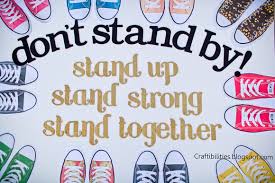
In sixth grade students studied statistics of bullying with a partner and highlighted three important details. They shared these with the rest of the class to learn from one another. Students learned from a power point what classifies as bullying as well as the role of the bystander. After the lesson students were asked to give one take-away they learned, and many students identified that they now know what bullying truly is, how to be an Upstander rather than a Bystander, and that bullying has life long effects on both the bullies and the victims being bullied. Students also learned important information about cyber-bullying and digital citizenship.