
Tuesday, May 7, 2019
Changes
It was with very bittersweet emotions that I recently announced that I will not be returning to HPE for the 2019-2020 school year. I will be moving on to middle school counseling. While I am very excited for this new adventure, I will greatly miss working with the staff, students, and families at Highland Park. Thank you for entrusting your children to us everyday! I wish the best for all of the students who have walked through the doors at HPE, and those who will continue to in the future.


Friday, April 12, 2019
Kelso's Choices--Conflict Resolution Lessons
In the months of April and May counseling lessons will focus on conflict resolution or solving problems. Students will learn skills to identify small/minor problems vs. big/major problems and how to resolve them in the most effective manner.
Students in grades K-4 will learn the difference between small problems: ones that cause us to feel angry, frustrated, annoyed, and sometimes sad, and big problems: ones that are dangerous or that cause us to feel nervous or worried. Students in grades 5-6 will identify the difference between minor problems and major problems. These problems cause similar feelings to small and big problems but are more specific/unique to older students. Students are taught to use how they feel about a problem to decide what strategies they can use to solve it.
All students will learn that small problems or minor problems can be solved on their own without asking for assistance from adults. Students learn 9 strategies/skills to solve small problems and the general rule of thumb is to try two of these 9 strategies before asking for an adult to help. Big or major problems require assistance from an adult right away.
Please see the parent letter below for more information about these problem solving skills that your child learned through their counseling lesson this month!


Thursday, February 7, 2019
January Diversity Lessons
When I talk about diversity with kids I like to go beyond celebrating our differences. I like to focus on how we treat others when they are different from us. My focus is on respecting others even when they are different from us and when we sometimes don't understand them.
In Kindergarten I brought in a brown egg and a white egg. Students brainstormed how these eggs are different on the outside. The list was rather limited--to color (brown and white), where they came from (different chickens produce different colored eggs) and sometimes their shape (my eggs were not congruent!). Then, we predicted what was the same about these eggs. Answers included: you can eat them, cook with them, they are both round, both have a shell, they both have yolk, and both come from chickens, etc.
Then, I cracked open the eggs. We looked at the insides, and students decided that though the eggs look different on the outside, they are the same on the inside! I took this farther and related it to us as people. Even though we all look different, sometimes some of us act different from each other, and we have different backgrounds (come from different places) we all have many similar wants: to be liked, to learn, to have fun, to be included, to have friends, to be treated with respect.


We read the book "This is the Dream" by Shane Shore & Jessica Alexander. Students learned that in our country's past different people weren't aloud to do things because of the color of their skin. Students were able to relate what we learned from the egg experiment to how far we have come in respecting other's differences.
1st graders evaluated how we are different and alike. Students then completed a worksheet all about them, to help them think about how they are unique and special, and would like to be included and accepted for who they are no matter what!


Second graders read the story: Red, A Crayon's Story. In this story, the crayon is labeled red, but he is actually blue. His friends, parents, and teachers try and help him color "red" but he can't do it, no matter how hard he presses or how many times he tries. Finally, one color asks him to color a blue ocean, and he realizes he's blue, and life is much easier for him. Students were able to identify that the other crayons were trying to make Red be someone he wasn't, simply because that's what his label said. We talked about how this is like judging a book by it's cover: we don't know who someone is until we get to know them. Who they are on the inside makes them who they are: not what they look like on the outside.
In 3rd grade we read the story Scribbleville. In this story, the town is called Scribbleville and all of the residents are "scribbly." There are no straight lines. However, a straight-lined man moves in and builds a straight lined house. The town members don't want him, and the story continues to grapple with whether or not they will run him out of town or accept him and allow him to stay. This story brings up many great conversations about accepting others when they are different from us. Students then completed an activity when they identified ways they are alike and different from a peer in class, to help them practice getting to know more about someone by having a relationship with them, not deciding what we think about someone simply by how they look.
In 4th and 5th grade students learned the definition to the words prejudice, stereotype, discrimination. They applied these definitions to different situations, such as "All tall people are smart" and "You dislike all people who wear braids." Students brainstormed ways that they might be "pre-judged" or what opinions others might form of them just by looking at them or their first impression. Examples included: "because I am tall people think I like basketball. I am a girl so people assume I like the color pink." One student said, "because I have white skin people think I am Caucasian, but I am part Hispanic."
Students then completed activities to help them learn how they are alike and different from others. Students in 5th grade learned about the iceberg analogy, that there differences that we see on the outside (tip of the iceberg), but much of what makes us who we are is on the inside, or below the surface, that we can't see unless we actually KNOW them: ask them questions, understand their experiences, and learn about their lives.

6th graders read the story "Let's Talk About Race." The main idea of this story is that we are much more than the color of our skin. Students then made collages of themselves to express who they are and what make them who they are (interests, family, life experiences, race, culture, religion). Please see some examples below of their projects.


Tuesday, December 18, 2018
November and December Lessons
In the month of November and December, my focus with students was mental well-being and coping strategies for stressful or overwhelming situations. Kindergartners and first graders learned how to belly breathe. We discussed using this strategy when they are experiencing a difficult emotion. We talked specifically about worry in these grades. Students learned when worry is helpful and when worry becomes excessive and can be harmful, and how to use deep breathing to calm ourselves. We used stuffed animals on our tummies as "breathing buddies" to help us focus on deep belly breathing.


Second graders learned what it means to be present and also practiced belly breathing. I have visited their classrooms a few more times with other calming strategies including a body scan, linked below, and using a color page as a way to calm down when feeling overwhelmed.
https://soundcloud.com/mindfulmagazine/body-scan-meditation-for-kids
Third graders learned how yoga poses can help us as a coping strategy. We practiced various yoga poses, focusing on paying attention to our breathing and not being distracted by thoughts and emotions, but rather being in control of our bodies, feelings and thoughts. We discussed different times we could use yoga poses in our lives, and many students identified that this may help them wind down before bed.

Fourth graders learned how gratitude can be a coping skill. We learned that gratitude can change our thinking about a situation that causes us a difficult emotion. Many students identified math and siblings as "stressors" in their lives. We talked about how changing our thinking from "math is hard" or "math is stressful" to "I'm grateful to learn math and stretch my thinking" or "I'm grateful for the opportunity learn new things." Students created a gratitude box to take with them to use as a coping strategy when they are needing a bit of a mindset change.
Fifth and Sixth graders each received a lesson on Mental Health First Aid, focusing on how to identify in ourselves and those we care about if they might be struggling emotionally and need someone to talk to. Students learned the acronym ACT: Acknowledge (the change in the person that might indicate that they are struggling), Care (share your concern with them), Tell (tell a trusted adult).


Second graders learned what it means to be present and also practiced belly breathing. I have visited their classrooms a few more times with other calming strategies including a body scan, linked below, and using a color page as a way to calm down when feeling overwhelmed.
https://soundcloud.com/mindfulmagazine/body-scan-meditation-for-kids
Third graders learned how yoga poses can help us as a coping strategy. We practiced various yoga poses, focusing on paying attention to our breathing and not being distracted by thoughts and emotions, but rather being in control of our bodies, feelings and thoughts. We discussed different times we could use yoga poses in our lives, and many students identified that this may help them wind down before bed.

Fourth graders learned how gratitude can be a coping skill. We learned that gratitude can change our thinking about a situation that causes us a difficult emotion. Many students identified math and siblings as "stressors" in their lives. We talked about how changing our thinking from "math is hard" or "math is stressful" to "I'm grateful to learn math and stretch my thinking" or "I'm grateful for the opportunity learn new things." Students created a gratitude box to take with them to use as a coping strategy when they are needing a bit of a mindset change.
Fifth and Sixth graders each received a lesson on Mental Health First Aid, focusing on how to identify in ourselves and those we care about if they might be struggling emotionally and need someone to talk to. Students learned the acronym ACT: Acknowledge (the change in the person that might indicate that they are struggling), Care (share your concern with them), Tell (tell a trusted adult).
Monday, November 5, 2018
October Lessons--Bullying
This month classroom lessons were on bullying. My goal with bullying lessons is that students are able to identify what bullying is (repeated or likely to be repeated, purposeful, harmful behavior), the effects of bullying on others, and ways to stop bullying when they see it. We always focus on Habit 1: Be Proactive during these lessons: we are in charge of our own actions and we are able to ensure bullying is not happening if we 1) don't do it, and 2) stand up to others who are. I like to use a read aloud story in most grades so students can use critical thinking skills in order to achieve these three learning goals during my lesson.
Here is a great visual to help students identify what is true bullying vs. other behaviors that they don't like or might need help resolving. I am using this comparison in my lessons with all students so they can identify the difference.

Kindergartners read the story Chester Raccoon and the Big Bad Bully. In this story students were able to see that bullying behavior is purposeful, repeated, causes students to not want to attend school and to be afraid and worried. Students also learned through the story that everyone standing together to say that bullying is not ok is a very effective way to stop bullies. Mama Raccoon tells a story about how rocks that are rough around the edges can be smoothed out to be held. I gave students rough rocks and smooths rocks to help them understand that our words and actions can be rough, painful, and hurt others, or they can be soft, smooth, and cause others to want to be around us. Students created puppets to re-enact the story for their families at home.

1st graders read the story Lucy and the Bully. After the lesson students completed a character web to compare and contract the victim (Lucy) and the bully (Tommy). Students thought about who they would like to be of these two characters. In one class, a student recognized that after Tommy was talked to by an adult and realized his behavior's harmful effects on others as well as Lucy's kind actions toward him, he was able to change. I loved this ah-ha moment! If students are engaging in bullying behaviors, they are able to change! This was a perfect take-away from the lesson, and I was impressed by the 1st grader's thinking.


In 2nd grade students read The Bully Blocker's Club. In this story the main character is excited about school until one student makes fun of her, steals her things, calls her names, makes jokes about her, and encourages others to join in. Then, the main character feels worried about going to school and doesn't doesn't want to go, and she constantly feels sick to her stomach, causing her to go to the nurse's office but not know why she's going. We were able to identify that this is bullying behavior and not just a mean moment or a conflict between friends because it is repeated behavior and it is significantly interfering with her ability to learn and the school environment. Students then learned from the story different ways to try and stop bullying, but what really works is when everyone stands up to bullying (instead of joining in or standing by and not doing anything), and reporting it to an adult. Students went home with a letter that aids parents in talking with their child about bullying behaviors and reinforces the learning targets from the lesson.
In 3rd grade, students read the book The Invisible Boy and learned about empathy. Students learned that by using empathy, putting yourself in someone else's shoes, you are able to stand up to bullying and stop it when it's happening. Using empathy allows you to view a situation from someone else's perspective and then choose how to respond. Using empathy to understand how others would feel when being bullied encourages us from engaging in bullying behavior, as well as to stand up to others who are bullying.
4th, 5th, and 6th graders received a bullying lesson from Lee's Summit Cares with Kerri Gray.
Monday, September 24, 2018
September Lessons--Friendship and Respect
In September students are receiving lessons on how to treat one another with kindness and respect at school and building a safe and welcoming community classroom. This always starts with them! If they can choose to be kind and welcoming, their classroom and our school will be one where students can do their best learning and want to be everyday.
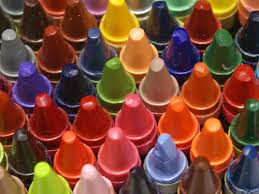
Kindergartners listened to the story "The Crayon Box that Talked" by Shane DeRolf. They learned that we should treat everyone with kindness and respect even when they are different from us. Being different is something to celebrate and we are able make a more colorful picture when we are different than if all the same color. Students related this story to their classroom: working together builds a strong and safe community that helps all students to feel that they belong.
2nd graders listened to the book "ONE" by Kathryn Otoshi and discussed how to stand up to bullying or unkind behavior. They each identified that it takes courage to stand up when they see others being treated unkind or being bullied. Students identified the character traits of each of the colors and the number 1 in the book. They thought about which color they would be, as well as what it takes to be "1" to stand up to unkind behavior. To hear this book by the author please see the video below.

Through this lesson students learn how to accept and respect other’s point of view. There are always two sides, and it’s our job to try and understand someone else's perspective, which truly is empathy: putting yourself in someone else's shoes.


Kindergartners listened to the story "The Crayon Box that Talked" by Shane DeRolf. They learned that we should treat everyone with kindness and respect even when they are different from us. Being different is something to celebrate and we are able make a more colorful picture when we are different than if all the same color. Students related this story to their classroom: working together builds a strong and safe community that helps all students to feel that they belong.
2nd graders listened to the book "ONE" by Kathryn Otoshi and discussed how to stand up to bullying or unkind behavior. They each identified that it takes courage to stand up when they see others being treated unkind or being bullied. Students identified the character traits of each of the colors and the number 1 in the book. They thought about which color they would be, as well as what it takes to be "1" to stand up to unkind behavior. To hear this book by the author please see the video below.
3rd graders read the book "Spaghetti in a Hot Dog Bun" by Miranda Dismondy, a story about having the courage to be who you are. Students identified that the school and classroom environment has to utilize Habit 5: Seek First to Understand and then to be Understood in order to allow students to truly be who they are. In order to accept one another even when they are different, we have to be willing to understand who they are by getting to know them. We discussed how this is important for creating a classroom culture of acceptance and belonging.
4th graders read the book "A Bad Case of Stripes." In this story, the main character is easily influenced by others' opinions of her and she changes into what others say. We discuss how she needs to learn to be true to who she is. However, we identified that in the story the students in her class also need to create a classroom environment where she feels she is able to be herself and not what others think she should be. Students then learned "I statements" to help them express their feelings about how others are treating them and to help them stand up for themselves should they find they are being treated the same way as the main character in the story. See the image below for an example of an "I-statement."
5th Graders participated in a lesson to discuss stereotypes, appreciating differences, and peer pressure. We read the book "Hey Little Ant" as a way to understand the perspective of a situation from the boy's point of view vs. the ant's point of view. Students then looked at different "perspective" images to experience how one person sees a situation is different than another. Things that influence how they perceive something includes: life experiences, education, language, culture, etc.
Through this lesson students learn how to accept and respect other’s point of view. There are always two sides, and it’s our job to try and understand someone else's perspective, which truly is empathy: putting yourself in someone else's shoes.

6th graders received a lesson on their reputation. Students learned that they are very much able to shape how others view them by their words, actions, and choices. Students spent time thinking about and discussing what a reputation is and watched the video below, which illustrates how people will speak to our reputation when given a chance. Students were challenged to think about what would others say about them? They then created a reputation wordart on their Chromebooks to help them think about what values they have and what they would like others to say about them--how they are shaping their reputation.
Tuesday, August 14, 2018
Welcome to the 2018-2019 School Year
I want to extend a warm welcome to all returning and new HPE students and families! I am looking forward to this year of working with your child at Highland Park. I am sure you have heard that this year one of our district's Board Priorities is "student wellbeing." I am a huge advocate for overall wellbeing of all students (and for everyone, really!) and I am so excited to be finding #commonground with all LSR7 staff and community members to assist with this board priority!
Please take a moment to read the welcome letter below that outlines the many ways I work with students at Highland Park Elementary to ensure success. I am greatly looking forward to working with each one of you!
Beginning of the year letter.

Please take a moment to read the welcome letter below that outlines the many ways I work with students at Highland Park Elementary to ensure success. I am greatly looking forward to working with each one of you!
Beginning of the year letter.

Friday, March 16, 2018
Kelso's Choices--Conflict Resoloution
This month, students are learning how to use how they feel about a problem to help them determine if it is a small (kid-sized) problem that they can solve on their own, or if it's a big (adult-sized) problem that they need to tell an adult right away. Small problems cause us to feel irritated, frustrated, annoyed, angry, and sometimes sad. Big problems are often dangerous, someone could get hurt or is in trouble, or it is against the law. These problems cause us to feel worried, nervous, anxious, and scared.
Students can use Kelso's choices to solve small problems. Students learn that they should always try 2 of Kelso's choices before asking an adult to help them solve the problem if what they have tried doesn't work. See the wheel below for all of Kelso's choices.

I want to showcase 3rd grade, who used a video discussion on Schoology to show what they learned and apply Kelso's choices to problems. Each student was given a problem, and they were tasked with creating a video that explained why they thought the problem was a big or small problem (how they felt about it), and which Kelso's choices they could use to solve the problem. Then, they were aked to watch two other student's videos and use accountable talk to agree or disagree with the student. They really enjoyed this activity and their videos were adorable!


If your child has a problem at home with siblings or peers, I encourage you to remind them of big and small problems. Remember, they are smart enough and strong enough to solve small problems on their own!
Students can use Kelso's choices to solve small problems. Students learn that they should always try 2 of Kelso's choices before asking an adult to help them solve the problem if what they have tried doesn't work. See the wheel below for all of Kelso's choices.

I want to showcase 3rd grade, who used a video discussion on Schoology to show what they learned and apply Kelso's choices to problems. Each student was given a problem, and they were tasked with creating a video that explained why they thought the problem was a big or small problem (how they felt about it), and which Kelso's choices they could use to solve the problem. Then, they were aked to watch two other student's videos and use accountable talk to agree or disagree with the student. They really enjoyed this activity and their videos were adorable!


If your child has a problem at home with siblings or peers, I encourage you to remind them of big and small problems. Remember, they are smart enough and strong enough to solve small problems on their own!
Friday, March 2, 2018
Talking with Kids About Tragedy
Sometimes we find ourselves needing to talk with children about difficult things. Here is a guide that can assist you in having these important conversations.
Tuesday, January 2, 2018
Mindfulness Lessons
Recent counseling lessons were on Mindfulness. This is achieving a mental state where one is able to acknowledge their feelings and thoughts and control their reactions appropriately. Students learned about the stress reaction in the brain: the brain sends signals to the body which cause automatic reactions to situations that are threatening, experiences that are unexpected, or emotions that are unpleasant. We feel these reactions in our body in many ways including: shortness of breath, racing heart, rise in body temperature, and confusion. Mindfulness focuses on how to acknowledge these emotions and reactions before responding. That is, before allowing our body to react due to the automatic stress response, stop, take deep breaths, and then respond. This is a skill that must be first learned and then practiced!
For more information on calming and mindfulness techniques, visit https://www.calm.com/
 |
| from www.blissfulkids.com |
For more information on calming and mindfulness techniques, visit https://www.calm.com/
Thursday, October 19, 2017
Growth Mindset Lessons
In October I visited classrooms talking with students about Growth Mindset. Students learned how to persevere through challenging tasks by changing their mindset or thinking. I used literature in most grade levels to help facilitate discussions of characters facing something difficult, changing their mindset, and then overcoming. Students applied this new learning to themselves and different things that they haven't learned to do "YET."
In Kindergarten students read the story Giraffes Can't Dance. They learned that even when others tell us we can't, we should believe in ourselves and never give up! Students wrote about something they can't do "Yet" but if they keep trying they will get it!
1st graders heard the story "Jabari Jumps." Jabari is afraid of jumping off the high dive and spends most of his day at the pool making excuses why he can't climb the ladder or why he isn't ready to jump. We discussed that when things are new for us and we haven't tried them yet it can be hard to have the courage to try. However, once Jabari jumped off the high dive, he immediately wanted to do a back flip the next time. Students were able to apply this to when we persevere through something hard and accomplish it, we will want to try more things that are new and different and we will be more willing to take on challenges.


In 2nd grade we read the story "Penelope Perfect." Penelope plans out every part of her day so that she doesn't make any mistakes and gets perfect grades and looks perfect every day. Penelope even skips recess to stay in and study. Students recognized that Penelope was not balanced, she never Sharpened the Saw, and she was always worrying and stressed because of it. One day the electricity goes out and Penelope's day is thrown off. She expects the day to be awful but realizes that she actually has fun at recess and her non-ironed clothes are comfortable. Students decided that balance is best and even when things don't go our way, we can choose to have a positive mindset and learn from mistakes.
3rd Graders read the story "Bubble Gum Brain" that contrasted two characters: Bubble Gum Brain (a child with growth mindset) and Brick Brain (a child with fixed mindset). Students completed a sorting activity in pairs to discuss the difference between growth vs. fixed mindset thinking statements.


4th Graders learned about Growth Mindset via Google Slide presentation, utilizing different videos including the one below. Then, they played an activity "Going to the Moon" to experience what it feels like to not get something "yet." I would say "I'm going to the moon and I'm bringing cookies but not cake....boots but not shoes..." and students would need to figure out the clue of what you can take to the moon. It took many tries but one student figured out the clue. Can you figure it out? Ask your 4th grader if you have one!
5th and 6th graders worked together in groups to complete a difficult task, and discussed what it felt like to persevere through something hard and eventually figure it out!


In Kindergarten students read the story Giraffes Can't Dance. They learned that even when others tell us we can't, we should believe in ourselves and never give up! Students wrote about something they can't do "Yet" but if they keep trying they will get it!
1st graders heard the story "Jabari Jumps." Jabari is afraid of jumping off the high dive and spends most of his day at the pool making excuses why he can't climb the ladder or why he isn't ready to jump. We discussed that when things are new for us and we haven't tried them yet it can be hard to have the courage to try. However, once Jabari jumped off the high dive, he immediately wanted to do a back flip the next time. Students were able to apply this to when we persevere through something hard and accomplish it, we will want to try more things that are new and different and we will be more willing to take on challenges.


In 2nd grade we read the story "Penelope Perfect." Penelope plans out every part of her day so that she doesn't make any mistakes and gets perfect grades and looks perfect every day. Penelope even skips recess to stay in and study. Students recognized that Penelope was not balanced, she never Sharpened the Saw, and she was always worrying and stressed because of it. One day the electricity goes out and Penelope's day is thrown off. She expects the day to be awful but realizes that she actually has fun at recess and her non-ironed clothes are comfortable. Students decided that balance is best and even when things don't go our way, we can choose to have a positive mindset and learn from mistakes.
3rd Graders read the story "Bubble Gum Brain" that contrasted two characters: Bubble Gum Brain (a child with growth mindset) and Brick Brain (a child with fixed mindset). Students completed a sorting activity in pairs to discuss the difference between growth vs. fixed mindset thinking statements.


4th Graders learned about Growth Mindset via Google Slide presentation, utilizing different videos including the one below. Then, they played an activity "Going to the Moon" to experience what it feels like to not get something "yet." I would say "I'm going to the moon and I'm bringing cookies but not cake....boots but not shoes..." and students would need to figure out the clue of what you can take to the moon. It took many tries but one student figured out the clue. Can you figure it out? Ask your 4th grader if you have one!
5th and 6th graders worked together in groups to complete a difficult task, and discussed what it felt like to persevere through something hard and eventually figure it out!


Growth Mindset
Books
- The Dot by Peter Reynolds
- The Most Magnificent Thing by Ashley Spires
- The Girl Who Never Made Mistakes by Gary Rubinstein
- What to do with an idea by Kobi Yamada
- What to do with a problem by Kobi Yamada
- Ish by Peter Reynolds
- Your Fantastic Elastic Brain by JoAnn Deak
- Penelope Perfect by Shannon Anderson
- Stuck by Oliver Jeffers
Subscribe to:
Posts (Atom)